Ethical Hacking: A Complete Guide to How It Works, Benefits, and Importance
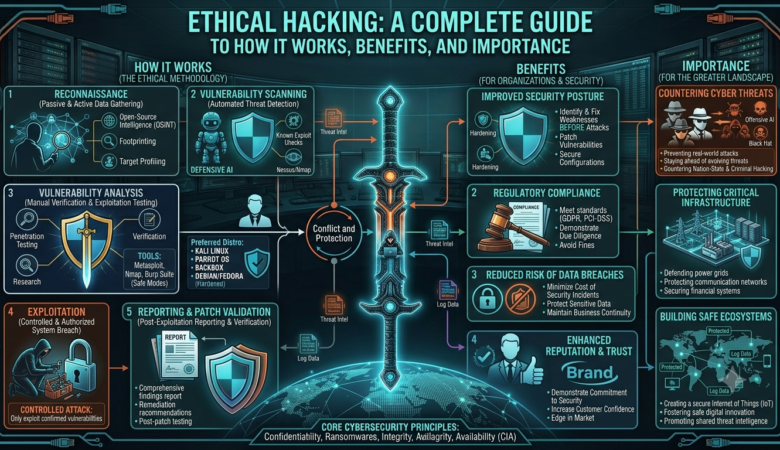
Introduction The internet has become part of almost everything we do. People use online banking to manage their money, businesses store customer information in cloud systems, students attend classes through digital platforms, and government departments provide many services online. This convenience has made life easier, but it has also created a growing security problem. Every website, application, server, and connected device can become a potential target for cybercriminals. A single security weakness may allow an attacker to steal information, disrupt services, or gain unauthorized access to an organization’s systems. This is where ethical hacking becomes important. Ethical hacking is a security practice in which authorized professionals test systems, networks, websites, and applications to discover weaknesses before criminals can exploit them. Instead of using vulnerabilities for personal gain, ethical hackers document their findings and help organizations fix the problems. In simple terms, ethical hacking is about thinking like an attacker while working on the side of the defender. What Is Ethical Hacking? Ethical hacking is the authorized process of examining computer systems, networks, applications, or other digital environments for security vulnerabilities. The most important word in this definition is authorized. An ethical hacker must have permission from the system owner before performing security testing. Without authorization, the same activity could be considered illegal access. The goal of ethical hacking is not to steal information or damage a system. The goal is to discover security weaknesses and provide useful information that allows an organization to improve its defenses. For example, a company may hire an ethical hacker to test its website. During the assessment, the security professional may discover that an outdated software component contains a known vulnerability. The ethical hacker reports the issue, explains its potential impact, and recommends that the company update or replace the vulnerable component. This process gives the organization an opportunity to fix the problem before a real attacker discovers it. Who Is an Ethical Hacker? An ethical hacker is a cybersecurity professional who is authorized to assess the security of a system. Ethical hackers may work as: Penetration testers Security consultants Vulnerability analysts Red team professionals Application security specialists Network security professionals Security researchers Their responsibilities can vary depending on the organization and the type of assessment being performed. A good ethical hacker needs more than technical knowledge. Communication and professional judgment are equally important. A vulnerability report is only useful if the organization understands what was discovered, why it matters, and how it should be addressed. Why Is Ethical Hacking Important? Cyberattacks are not limited to large technology companies. Small businesses, schools, hospitals, financial institutions, government organizations, and online stores can all become targets. Many attacks succeed because organizations do not know where their weaknesses are. Ethical hacking provides a proactive approach to security. Instead of waiting for an attacker to discover a vulnerability, organizations can deliberately search for weaknesses under controlled and authorized conditions. 1. Finds Security Weaknesses One of the main purposes of ethical hacking is identifying vulnerabilities. These weaknesses may exist in: Websites Web applications Mobile applications Networks Servers Cloud environments Authentication systems APIs Security configurations Finding these issues early gives security teams time to fix them. 2. Protects Sensitive Information Organizations often handle valuable information such as customer records, financial information, employee data, business documents, and authentication credentials. A successful cyberattack can expose this information and create serious consequences. Security testing helps organizations identify weaknesses that could potentially expose sensitive data. 3. Reduces Financial Risk Cybersecurity incidents can become expensive. Businesses may face costs related to incident response, system recovery, legal obligations, customer notification, lost productivity, and reputational damage. Ethical hacking does not eliminate these risks, but identifying vulnerabilities before an incident occurs can reduce the likelihood and potential impact of certain attacks. 4. Builds Customer Trust Customers want to know that their information is being handled responsibly. Organizations that take security seriously can strengthen their reputation and demonstrate that protecting customer information is an important part of their business practices. How Does Ethical Hacking Work? A professional ethical hacking engagement normally follows a structured process. The exact methodology depends on the scope of the assessment, but several stages are common. Step 1: Information Gathering The first stage involves understanding the target environment. The security professional may identify relevant systems, applications, domains, technologies, and publicly available information that falls within the agreed scope. This stage helps create a picture of the environment before testing begins. Information gathering is important because security professionals need to understand what they are testing and where potential exposure may exist. Step 2: Finding Vulnerabilities Once the environment is understood, the ethical hacker looks for possible weaknesses. This can involve reviewing configurations, identifying outdated components, examining application behavior, and using authorized security testing tools. The objective is to determine whether weaknesses exist and how serious they could be. Step 3: Security Testing The tester then validates relevant findings within the agreed rules of engagement. This stage is carefully controlled. Ethical hackers should avoid unnecessary disruption, data loss, or damage to production systems. The goal is to demonstrate the security impact of a vulnerability without causing harm. Step 4: Reporting the Results Reporting is one of the most important parts of an ethical hacking engagement. A professional report normally explains: What was discovered Where the vulnerability exists How serious the issue is What systems may be affected Evidence supporting the finding Recommended remediation steps A strong report gives technical teams enough information to fix the issue and allows management to understand the associated business risk. Common Ethical Hacking Tools Ethical hackers use a variety of tools depending on the type of security assessment. Nmap Nmap is widely used for network discovery and security auditing. It can help security professionals understand which hosts and services are available within an authorized environment. Wireshark Wireshark is a network protocol analyzer. It allows professionals to inspect network traffic and troubleshoot or investigate communication behavior. Burp Suite Burp Suite is commonly used for testing web applications. Security professionals can use it to