
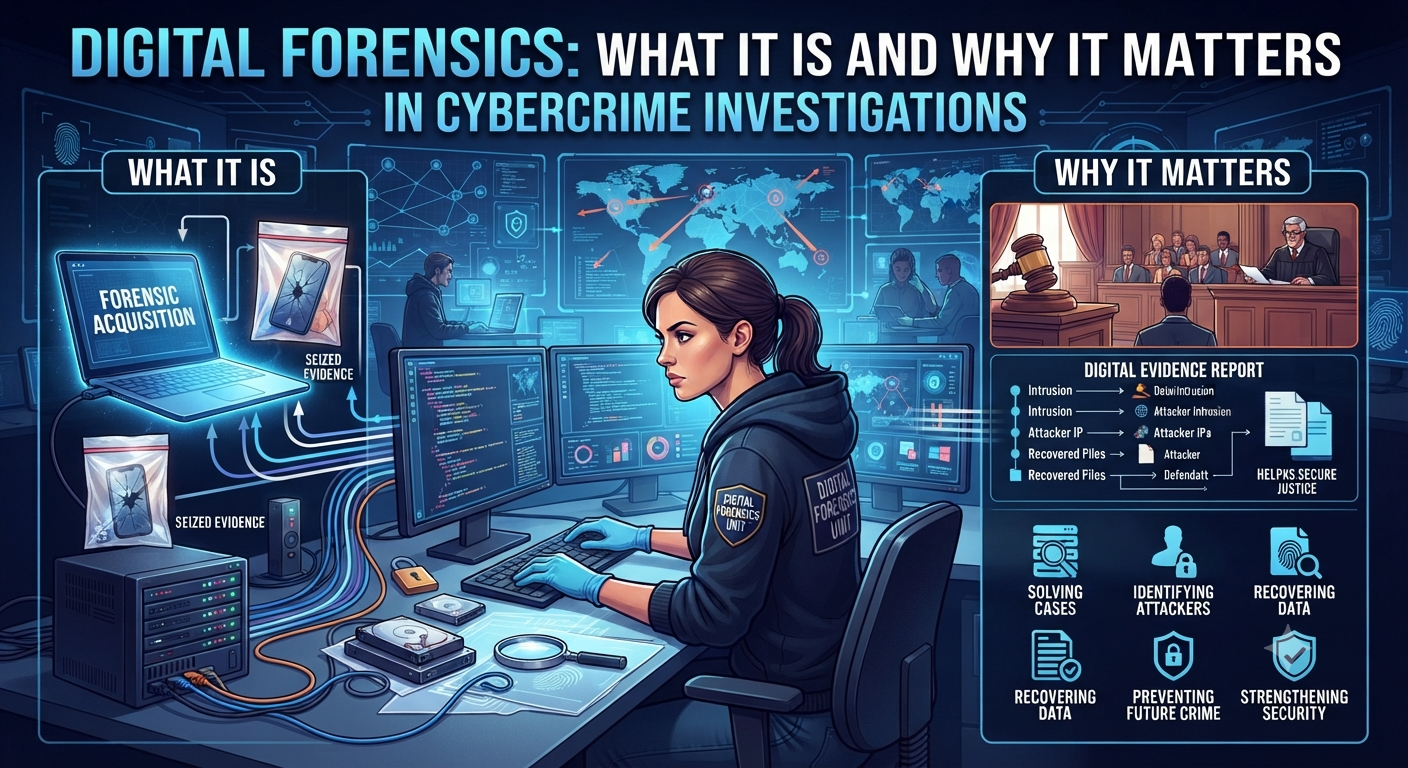
Digital Forensics: What It Is and Why It Matters in Cybercrime Investigations
Digital Forensics: What It Is and Why It Matters in Cybercrime Investigations
Introduction: The Rise of Digital Evidence
Every day, we create billions of digital footprints—emails, texts, social media posts, online purchases, and more. Our lives, both personal and professional, are enmeshed in the digital world. But as our reliance on technology grows, so does the opportunity for cybercrime.
From stolen credit card numbers to elaborate ransomware attacks and insider threats, digital crime is no longer the stuff of Hollywood thrillers—it’s a daily reality for businesses, governments, and individuals. When a cybercrime occurs, how do investigators uncover the truth? Digital forensics is the answer.
What Is Digital Forensics?
Digital forensics is a specialized branch of forensic science focused on identifying, preserving, analyzing, and presenting digital evidence in a manner that stands up in court. It’s the art and science of investigating electronic devices—computers, smartphones, servers, cloud accounts, and more—to answer the questions: what happened, how did it happen, who was responsible, and when?
Think of digital forensics experts as “digital detectives.” Instead of dusting for fingerprints or examining physical evidence, they recover deleted emails, trace network activity, crack encrypted files, and reconstruct timelines from the bits and bytes left behind.
Key Point for SEO:
Digital forensics is vital for modern cybercrime investigations, helping law enforcement and organizations uncover evidence, identify perpetrators, and secure successful prosecutions.
Why Digital Forensics Matters in Cybercrime Investigations
1. Uncovering Hidden Evidence
Criminals are increasingly sophisticated, using encryption, anonymization, and anti-forensic techniques to cover their tracks. Digital forensics gives investigators the tools to find evidence that would otherwise remain hidden—whether it’s a deleted file, a manipulated log, or a digital breadcrumb buried in a cloud account.
2. Preserving Evidence Integrity
For evidence to hold up in court, it must be handled meticulously. Digital forensics specialists use strict protocols to ensure that evidence is preserved exactly as found—no alterations, no accidental deletions, and a clear “chain of custody” documenting every step.
SEO Tip:
Courts require digital evidence to be forensically sound. Digital forensics ensures evidence is admissible, credible, and robust.
3. Supporting a Wide Range of Investigations
Digital forensics isn’t just for major hacks or corporate espionage. It plays a crucial role in:
- Data breaches and ransomware attacks
- Insider threats and employee misconduct
- Intellectual property theft
- Financial fraud and embezzlement
- Child exploitation and cyberbullying
- Terrorism and organized crime
If it leaves a digital trace, digital forensics can help find it.
The Digital Forensics Process: From Discovery to Courtroom
Let’s walk through how a typical digital forensics investigation unfolds:
1. Identification
The process begins with identifying all potential sources of evidence. This could include laptops, desktops, USB drives, smartphones, servers, or cloud storage. Investigators must cast a wide net to ensure nothing is missed.
Example:
In a suspected data breach, investigators might seize the suspect’s work laptop, personal phone, and access logs from cloud services.
2. Preservation
Preservation is about making exact, forensic copies of all relevant data. Investigators use tools like write blockers and imaging software to create clones of hard drives and memory—without altering the original data.
Best Practice:
Original devices are sealed and stored securely. All analysis is done on forensic copies to maintain evidence integrity.
3. Collection
During collection, investigators gather all data relevant to the case:
- Emails and chat logs
- Browser histories
- System and application logs
- Deleted files and metadata
- Network traffic
- Cloud storage contents
Each item is meticulously documented to maintain the chain of custody.
4. Examination
With the data in hand, examiners use specialized forensic software to sift through huge volumes of information:
- Recovering deleted files
- Searching for keywords or patterns
- Analyzing file timestamps and registry entries
- Identifying malware or unauthorized access
- Mapping user activity and connections
SEO Tip:
Digital forensics tools like EnCase, FTK, Autopsy, and Magnet AXIOM enable deep analysis and reporting of digital evidence.
5. Analysis
Here, the pieces come together. Investigators reconstruct timelines, identify suspicious behavior, and connect digital clues to real-world events. They answer the critical questions: Who did what, when, and how?
Example:
A forensic analyst might prove that a departing employee copied confidential files to a USB drive minutes before resigning.
6. Reporting
The final report is crucial. It must clearly outline:
- The evidence collected
- The methods used
- The findings and conclusions
- A timeline of relevant events
Reports must be understandable to both technical and non-technical audiences—including judges, lawyers, and juries.
Specialized Areas of Digital Forensics
Digital forensics covers several subfields, each with its own tools and challenges:
Computer Forensics
Focuses on traditional computers and storage devices. Investigators may recover deleted files, analyze system logs, and track user activity on desktops and laptops.
Mobile Device Forensics
Smartphones and tablets hold a treasure trove of evidence—texts, call logs, photos, GPS data, app histories, and more. Mobile forensics specialists use tools like Cellebrite and XRY to extract and analyze this data.
Network Forensics
Investigates data moving across networks. By analyzing packet captures, firewall logs, and router records, network forensics experts can trace unauthorized access, data exfiltration, and the spread of malware.
Cloud Forensics
With so much data now in the cloud, forensic experts must navigate a complex landscape of remote servers, shared access, and cross-border data storage. Cloud forensics blends technical expertise with legal savvy to uncover evidence in virtual environments.
Memory Forensics
RAM (random-access memory) analysis can reveal what was happening on a device at a specific moment—running programs, open documents, encryption keys, and even remnants of malware that never touched the hard drive.
Tools of the Digital Forensics Trade
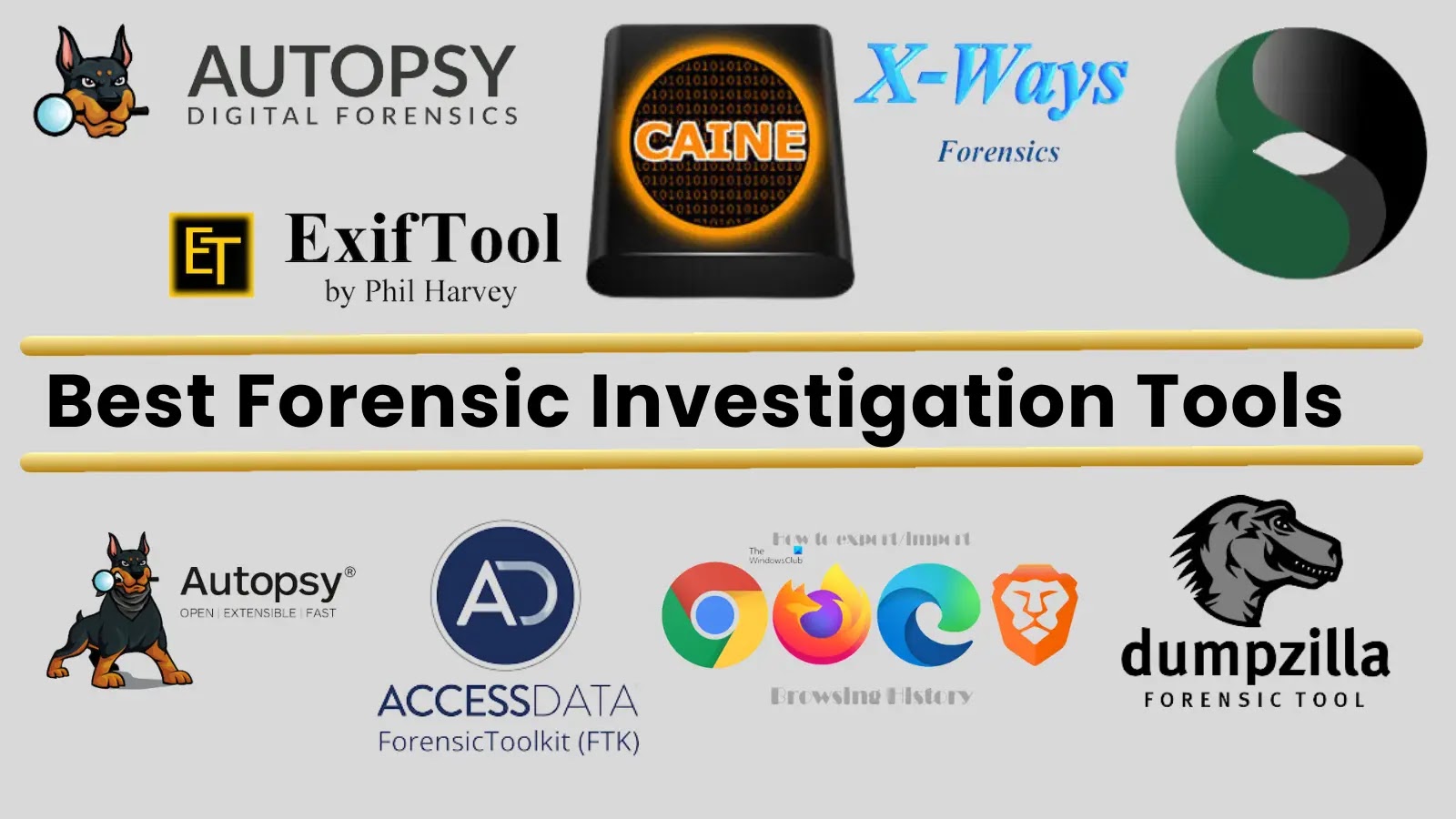
Digital forensics relies on a suite of specialized tools:
- EnCase: Industry-standard for imaging, analysis, and reporting.
- FTK (Forensic Toolkit): Comprehensive suite for file analysis and recovery.
- Autopsy/Sleuth Kit: Open-source option for disk and file system analysis.
- Magnet AXIOM: Integrates data from computers, mobiles, and cloud.
- Cellebrite: Leader in mobile device extraction.
- Wireshark: Network analysis and packet capture.
- Volatility: Advanced memory forensics.
- OSForensics: Flexible forensics for Windows environments.
Real-World Applications of Digital Forensics
Solving High-Profile Hacks
When a major retailer suffers a data breach, digital forensics teams are called in to find out how the attackers got in, what information was stolen, and how to prevent future incidents.
Investigating Insider Threats
If sensitive files go missing, forensic analysts can review logs and USB histories to see if an employee downloaded or copied confidential data.
Supporting Criminal Investigations
Law enforcement uses digital forensics to pursue cases involving terrorism, child exploitation, financial fraud, and more—often tracing suspects through their online actions.
Dispute Resolution and Litigation
In civil cases, digital evidence can prove (or disprove) claims of harassment, contract violations, or intellectual property theft.
The Challenges of Digital Forensics
Encryption and Privacy
While encryption protects user privacy, it also makes evidence harder to access. Investigators must balance privacy rights with the need to uncover the truth.
Massive Volumes of Data
Modern businesses generate terabytes of data daily. Sifting through this information to find relevant evidence is a logistical and technical challenge.
Anti-Forensic Techniques
Criminals use tools to hide, delete, or obfuscate digital evidence—secure file deletion, fileless malware, and log tampering are just a few tactics.
Legal and Jurisdictional Issues
Cloud storage and international data transfer raise complex legal questions about who can access which data, and under what circumstances.
Best Practices for Digital Evidence Handling
To ensure evidence stands up in court, investigators must:
- Document every action (chain of custody).
- Use validated forensic tools and methods.
- Work only on forensic copies, never originals.
- Generate cryptographic hashes to prove evidence integrity.
- Follow legal and organizational standards for privacy and security.
Essential Skills for Digital Forensics Professionals
Success in digital forensics requires:
- Technical expertise (operating systems, networks, file systems)
- Analytical thinking and attention to detail
- Familiarity with legal standards and court procedures
- Strong communication skills (for reporting and testimony)
- Ethical judgment and discretion
The Future of Digital Forensics
As technology evolves, so does the world of digital crime—and the techniques to counter it. Trends shaping the future of digital forensics include:
- AI and Machine Learning: Automating evidence analysis and pattern recognition.
- Internet of Things (IoT) Forensics: Investigating smart devices, vehicles, and wearables.
- Cloud and Virtualization: Navigating complex, distributed environments.
- Blockchain and Cryptocurrency: Tracing digital transactions and assets.
- Automation: Streamlining repetitive forensic tasks for faster results.
Staying ahead means continuous learning, adapting to new threats, and mastering emerging tools.
Final Thoughts: Why Digital Forensics Matters Now More Than Ever
Digital forensics is the backbone of modern cybercrime investigations. In a world where nearly every action leaves a digital trace, these experts help uncover the truth, bring criminals to justice, and protect individuals and organizations from harm.
Whether you’re a business leader, IT professional, law enforcement officer, or simply someone who cares about privacy and security, understanding digital forensics is essential in today’s connected world. The next time you hear about a major breach or cyber investigation, remember: it’s the tireless, methodical work of digital forensics experts that brings answers out of the digital shadows.
Want to learn more?
Consider exploring courses in cybersecurity, forensic analysis, or ethical hacking. The field is growing—and the world needs more digital detectives than ever before.