Understanding Computer Forensics
Understanding Computer Forensics: The Digital Detective Behind Cybercrime Investigations

In our interconnected world, almost every move we make leaves a digital footprint—whether it’s a text, a bank transfer, or a photo uploaded to the cloud. These conveniences make life easier, but they also create hidden risks. Behind the scenes, a new breed of crime is emerging: data breaches, identity theft, corporate espionage, and financial scams, all powered by digital technology.
This is where computer forensics steps in. Think of computer forensics as CSI for the cyberspace: a blend of detective work, technical savvy, and legal know-how. These digital investigators dive deep into hard drives, smartphones, and cloud accounts, uncovering the clues that cybercriminals try to hide.
What Is Computer Forensics?
Computer forensics, sometimes called digital forensics, is the science of discovering, preserving, analyzing, and presenting digital evidence in a way that stands up in court. It’s about answering: what happened, how did it happen, who was involved, and when—all while making sure the evidence is untampered and legitimate.
Unlike regular IT troubleshooting, forensics isn’t just about fixing problems—it’s about piecing together the digital puzzle to reveal the truth.
Evidence can include:
- Deleted files or emails
- Internet browsing history
- Login records
- USB device history
- Hidden or encrypted data
- Malware or suspicious software
- Network connections
Every action someone takes on a digital device leaves a trace. A skilled forensic analyst knows exactly where to look.
Why Does Computer Forensics Matter?
Cybercrime isn’t just a plot in movies—it’s a daily reality for businesses, governments, and individuals. Criminals are constantly inventing new ways to steal, disrupt, and deceive, making digital investigations vital.
Computer forensics helps:
- Solve hacking incidents and data breaches
- Recover deleted or hidden information
- Detect insider threats and employee misconduct
- Support lawsuits and criminal cases
- Protect intellectual property and trade secrets
- Investigate financial fraud and scams
Without proper forensic work, crucial evidence might be lost forever, making it impossible to catch the culprits or even know what really happened.
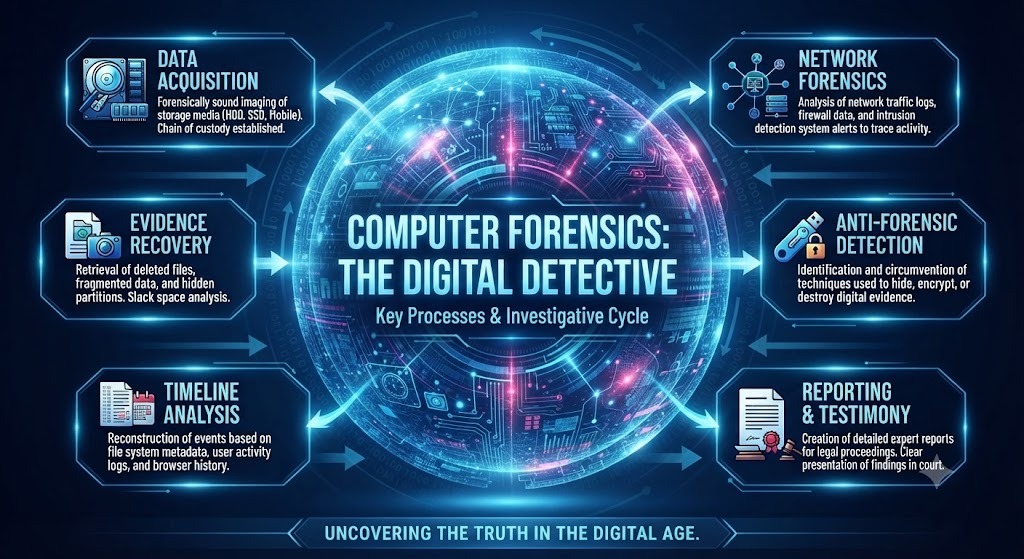
The Computer Forensics Process: How the Digital Mystery Gets Solved
1. Identification
First, investigators figure out what devices and accounts might hold evidence. This could be anything from a desktop at the office, to a smartphone, an email server, or even a cloud storage account.
2. Preservation
Preserving evidence is critical. Investigators use specialized tools to copy data without altering the original, keeping the evidence pristine for court. Forensic copies are made, and originals are locked away.
3. Collection
All relevant data—files, logs, emails, memory captures, and more—are gathered. Every step is documented to ensure the “chain of custody” (a record proving the evidence hasn’t been tampered with).
4. Examination
Using advanced software, analysts dig through the data. They look for things like deleted files, hidden malware, suspicious logins, or unusual network connections.
5. Analysis
This is where the pieces come together. Investigators build a timeline, figure out who did what and when, and determine whether data was stolen, altered, or destroyed.
6. Reporting
Finally, everything is compiled into a clear, thorough report that explains the findings in plain language. The report must be credible for both technical experts and non-tech-savvy audiences, such as judges or juries.
Specialized Areas of Computer Forensics
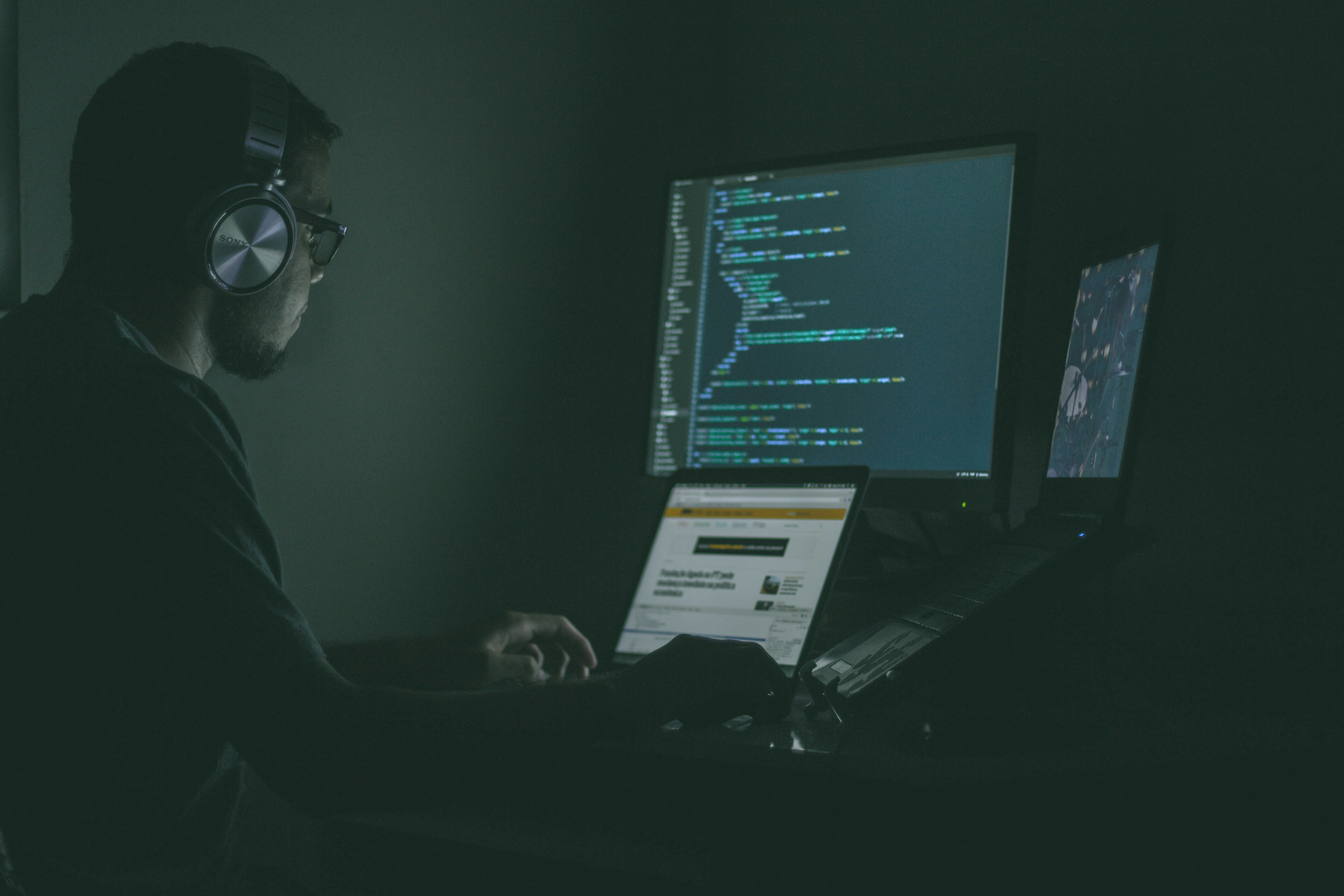
- Disk Forensics: Recovering deleted files or hidden partitions from hard drives and storage devices.
- Memory Forensics: Analyzing a device’s RAM to spot running malware or encryption keys.
- Network Forensics: Tracking network traffic, packets, and logs to investigate attacks.
- Mobile Device Forensics: Extracting messages, call logs, photos, and app data from smartphones and tablets.
- Cloud Forensics: Examining data stored across cloud servers and services—a growing challenge as businesses move online.
The Tools of the Trade
Professional investigators use:
- Autopsy
- FTK Imager
- EnCase
- Magnet AXIOM
- Cellebrite (especially for mobile devices)
- Wireshark (for network analysis)
These tools help recover deleted files, analyze system memory, and create detailed forensic reports.
Real-World Applications
Computer forensics isn’t limited to big headline-grabbing cyberattacks. It’s also used to:
- Investigate employee theft or data leaks
- Catch financial fraudsters in banks or insurance companies
- Respond to ransomware attacks
- Support court cases involving digital evidence
- Resolve intellectual property disputes
For example, after a ransomware attack, a forensic analyst might identify how the attackers got in, what data was stolen, and help law enforcement trace the culprits.
Challenges in Computer Forensics
The field isn’t without its hurdles:
- Encryption: Strong encryption protects user privacy, but also makes it tough for investigators to access data lawfully.
- Huge Volumes of Data: Businesses generate massive amounts of information, making it hard to find the “smoking gun” among millions of files.
- Cloud Storage: With data spread across multiple locations and providers, collecting evidence can be complex.
- Anti-Forensic Tactics: Criminals use software to erase, hide, or scramble evidence, constantly challenging investigators.
What Makes a Good Computer Forensics Professional?
It’s not just technical knowledge—though knowing how computers, networks, and storage work is essential. A great forensic analyst combines:
- Analytical thinking and curiosity
- Attention to detail
- Understanding of laws and legal procedures
- Strong communication skills (to explain findings simply)
- Up-to-date technical know-how
Career Opportunities
- Digital Forensics Analyst
- Incident Response Specialist
- Cybercrime Investigator
- Malware Analyst
- Security Consultant
Opportunities abound in government, law enforcement, banking, healthcare, tech companies, and consulting firms.
Staying Ahead: The Future of Computer Forensics
The digital world keeps evolving. New challenges like Internet of Things (IoT) devices, drones, and cryptocurrency mean forensic experts must keep learning. Artificial Intelligence, machine learning, and automation are becoming valuable tools to sift through vast data and detect patterns human eyes might miss.
Final Thoughts
Computer forensics is the bridge between technology and justice, uncovering the truth in a digital world. These professionals are the digital detectives, tracking clues across networks, devices, and clouds to solve mysteries, protect people, and bring wrongdoers to justice.
Whether you’re considering a career in digital forensics or just want to understand how cybercrime investigations work, one thing is clear: as long as there is technology, there will be a need for digital detectives.